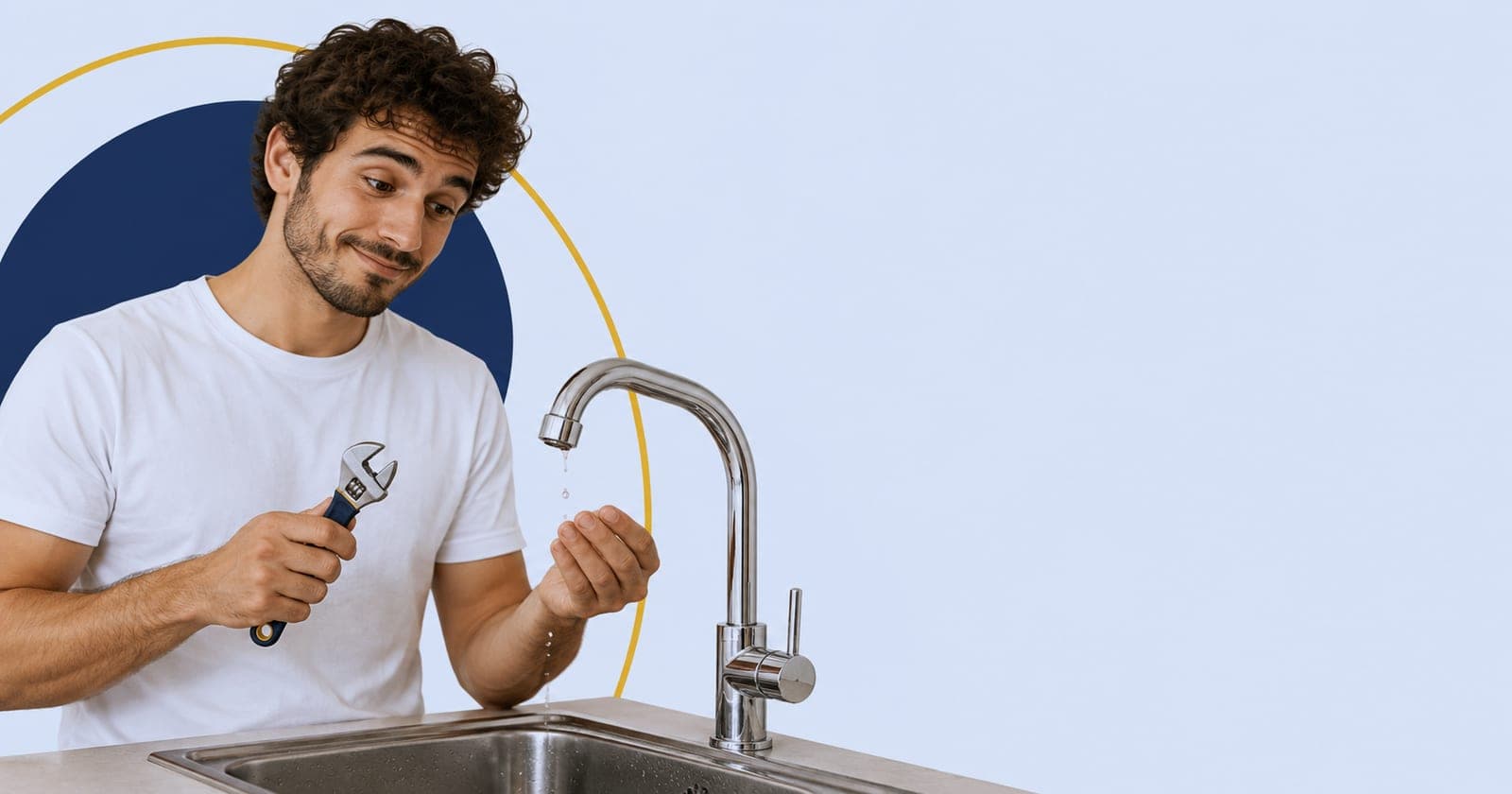
The tap drips, the boiler won't heat, water is coming through the ceiling. What should you do as a tenant, and who pays? Most problems get fixed quickly and without arguments if you know whose job it is and report it well.
Who fixes what?
As a rule, small maintenance that comes with everyday use is the tenant's job, while bigger repairs and the main appliances are the landlord's. But your contract can say otherwise, so check what you agreed.
A typical split, if the contract doesn't say otherwise:
Usually the tenant's:
- replacing light bulbs and batteries,
- blockages caused by use,
- tap washers and small adjustments,
- damage the tenant caused,
- regular cleaning, cleaning filters.
Usually the landlord's:
- the gas boiler, water heater and heating system,
- pipes and burst pipes,
- replacing windows and doors,
- appliances that broke down from age,
- leaks, unless the tenant caused them.
This list is only a guide. If in doubt, ask in writing before you do anything.
Report it straight away, in writing, with photos
The sooner you speak up, the smaller the damage. A written report with photos is your proof that you flagged it in time.
A good fault report includes:
- What's wrong: one sentence, for example "the bathroom tap drips, even when turned off".
- How long it's been happening.
- How urgent it is: can the room still be used, is the damage spreading?
- A photo or video of the problem and, if needed, its surroundings.
- When you're at home, so a tradesperson can get in.
A problem reported late can become your responsibility too. If a small drip turns into a leak over several weeks and you didn't say anything, you may be liable for the bigger damage, even out of your deposit.
In an emergency
With water, gas or electricity, first shut off whatever you can and call the utility's emergency line. Then tell your landlord.
When you move in, it's worth finding:
- the main water shut-off valve, and how to close it,
- the gas shut-off valve,
- the fuse box,
- the emergency numbers of the building's common representative (közös képviselő) and the gas provider.
If you smell gas, don't switch on any lights, open the windows, leave the flat and call the gas provider's emergency line from outside.
Don't get repairs done without agreeing first
If the repair is the landlord's job, agree it with them before calling someone in. Otherwise they may not pay you back.
If the landlord doesn't respond and the problem stops you using the flat properly, send a written demand with a deadline. If that doesn't work either, getting it repaired and claiming the cost back can become a legal matter. At that point, get help before you deduct anything from the rent.
If the landlord won't fix it
Don't withhold rent on your own. It can weaken your position and give grounds for terminating the lease. Instead:
- Document everything: every message, photo and date.
- Send a written demand with a realistic deadline.
- Get legal help if nothing moves.
FAQ
Who pays for fixing the washing machine?
If it's the landlord's machine and it didn't break through the tenant's fault, usually the landlord. If the tenant caused it, for example by overloading it, the tenant.
What should I do if the heating breaks at the weekend?
Tell your landlord in writing straight away. If you can't reach them and it's urgent, call an emergency tradesperson, but keep a written record of the cost and the decision.
Can I deduct the repair cost from the rent?
Only if you agreed on that. Deducting it on your own leads to disputes.
Rentkey
In Rentkey, you report problems with a photo or video and can see where the repair is at. For the landlord's side, see our article on maintenance.